Leather Goods Manufacturing: India vs. China vs. Vietnam vs. Italy (2026 B2B Comparison)
An objective, engineering-level comparison for fashion brand founders, creative directors, and retail procurement teams evaluating where to manufacture custom leather handbags, totes, briefcases, leather jackets, RFID wallets, and belts in 2026.
Which Country Is Best for Manufacturing Genuine Leather Goods in 2026?
For brands producing 100% genuine full-grain, top-grain, vegetable-tanned, or lambskin leather goods at order volumes between 50 and 2,500 units per style, India delivers the strongest landed value proposition in 2026. Unlike China (which faces punitive US Section 301 tariffs and rising labor costs) or Vietnam (which relies on imported hides and enforces 500–1,000+ piece factory MOQs geared toward synthetic/nylon bags), India possesses the world's largest domestic raw hide reserve with over 250+ LWG-certified tanneries. Compared to Italy and Turkey, top-tier Indian export ateliers like UNICON LEATHER utilize identical German Fortuna 0.4mm skiving machinery and Italian Fenice edge-painting chemistry at a 45% to 65% lower FOB unit cost, while unlocking 0% import duty for Australian (ECTA) and UAE (CEPA) buyers.
India vs. China vs. Vietnam vs. Italy / Turkey: 10-Point Benchmark
Direct comparison across material supply chains, MOQs, tariff regimes, benchcraft tolerances, and compliance.
| Procurement Dimension | 🇮🇳 India (Unicon Leather) | 🇨🇳 China (Guangzhou / Dongguan) | 🇻🇳 Vietnam (HCMC / Hanoi) | 🇮🇹 Italy / 🇹🇷 Turkey |
|---|---|---|---|---|
| 1. Domestic Raw Hide Supply | Abundant Domestic Supply: World's largest bovine, buffalo, goat & sheep inventory; zero raw-hide import delay. | High import dependency for premium full-grain cow/calf hides; heavy focus on PU/split leather. | 80%+ of finished full-grain leather must be imported from India, Italy, or Brazil. | World-famous tanneries (Tuscany/Bursa), but extremely high raw hide and energy costs. |
| 2. Minimum Order Quantity (MOQ) | 50 – 100 Pcs / Style: Ideal for D2C capsules, boutique luxury labels, and seasonal test drops. | 300 – 500 pcs per style for genuine leather (lower only for stock PU/catalog items). | 500 – 1,500+ pcs per style; factories built for mass assembly lines. | 50 – 150 pcs, but with high sample/pattern setup surcharges (€800+ per style). |
| 3. Indicative Handbag FOB Cost | $22.00 – $45.00 USD | $28.00 – $55.00 USD (plus US tariffs) | $26.00 – $52.00 USD (at 500+ MOQ) | €65.00 – €145.00+ EUR ($70–$160) |
| 4. US Import Tariff Exposure (HTS 4202) | Standard MFN Rate Only: Exempt from China Section 301 punitive tariffs. | Subject to base MFN duty + 25% Section 301 punitive tariff (30%+ total landed tax). | Standard MFN rate, but strict US CBP transshipment scrutiny. | Standard MFN rate on high base invoice value (increasing total dollar duty paid). |
| 5. Australia & UAE Duty Treaties | 0% Duty (Australia ECTA & UAE CEPA): Official Certificate of Origin waives 5% import tariff. | 5% standard GCC tariff in UAE; ChAFTA rules apply in Australia. | AANZFTA for Australia (subject to strict regional hide origin rules); 5% in UAE. | 5% import tariff in both Australia and UAE/GCC. |
| 6. Core Material Specialization | 100% Genuine Leather Mastery: Full-grain veg-tan, calf nappa, pull-up, bridle & plongé lambskin jackets. | PU vegan leather, microfiber, complex fast-fashion hardware, and split-leather mass retail. | Technical ballistic nylon, Cordura backpacks, canvas-trimmed sports gear, and athletic shoes. | Ultra-luxury haute couture calfskin, exotic skins, and artisanal small-batch pelletteria. |
| 7. Benchcraft & Edge Finishing | 0.4mm Fortuna Skiving + Fenice Ink: Generational hand-turning, saddle stitching & 4-coat edge lacquer. | Fast conveyor-line assembly; edge paint often applied thickly in 1–2 rapid coats. | Industrial binding-tape seams; fewer master artisans trained in turned-edge maroquinerie. | Benchmark artisanal edge inking and filettatura creasing. |
| 8. LWG & Chemical Compliance | LWG Gold/Silver + EU REACH + Prop 65: SGS/TÜV verified Cr VI <3ppm, AZO-free & ZLD effluent plants. | Variable across sub-suppliers; requires strict third-party auditing to prevent restricted solvent use. | Strong social compliance in tier-1 plants; traceability depends on origin of imported hides. | Native EU REACH compliance (Italy); LWG certified tanneries. |
| 9. Prototype Sample Turnaround | 7 – 14 Business Days: Direct English-speaking CAD pattern engineers & in-house leather library. | 10 – 21 days (longer if custom full-grain leather must be sourced externally). | 21 – 35 days (due to imported leather customs clearance for sampling). | 14 – 28 days (paused during August Ferragosto & holiday closures). |
How Unicon Leather Combines Kolkata's Bag Atelier with Noida's Outerwear Hub
India is not a monolith—different regional clusters specialize in specific tannages and silhouettes. Unicon Leather operates across India's two premier export corridors to give international brands single-window access to bags, SLGs, belts, and leather garments:
1. Kolkata (CLC Bantala Cluster)
Global Capital for Handbags & SLGs: Home to our 4-plot factory (Plots 42–45, Zone 3, Calcutta Leather Complex). Renowned for European-trained turned-edge maroquinerie, vegetable-tanned totes, laptop briefcases, and ultra-slim RFID wallets.
2. Noida / Delhi NCR Cluster
Premier Leather Jacket & Buying Hub: Home to our Sector-106 Noida corporate office. Specializes in drum-dyed plongé lambskin outerwear, goat suede bombers, high-fashion boutiques, and rapid air cargo dispatch via IGI Airport (DEL).
3. Chennai / Ranipet / Ambur
Finished Calf, Goat & Nappa Tannages: Southern India's LWG Gold-rated tanning belt, supplying ultra-fine drum-dyed calfskin, glazed kidskin, and lambskin linings directly into our Kolkata and Noida cutting floors.
4. Kanpur Heavy Leather Belt
Thick Vegetable-Tanned & Bridle Hides: Specializes in 3.2mm–4.2mm full-grain buffalo and heavy harness cowhide used in our hand-burnished bridle belts, rugged saddle bags, and equestrian accessories.
Key Questions When Transitioning Production to India
Three structural factors drive the shift from China to India for genuine leather goods: (1) Domestic Raw Hide Supply — India is the world's 2nd largest producer of footwear and leather garments with massive domestic LWG Gold/Silver bovine, buffalo, and ovine raw material reserves, whereas China and Vietnam must import most full-grain hides; (2) Tariff Arbitrage — Indian leather goods avoid punitive US Section 301 tariffs on China and qualify for 0% duty in Australia (ECTA) and the UAE (CEPA); and (3) Low MOQ Artisan Flexibility — Indian ateliers like Unicon Leather support 50–100 piece per style MOQs with hand-skived, hand-painted benchcraft, whereas Chinese and Vietnamese assembly lines typically require 300–1,000+ units per SKU.
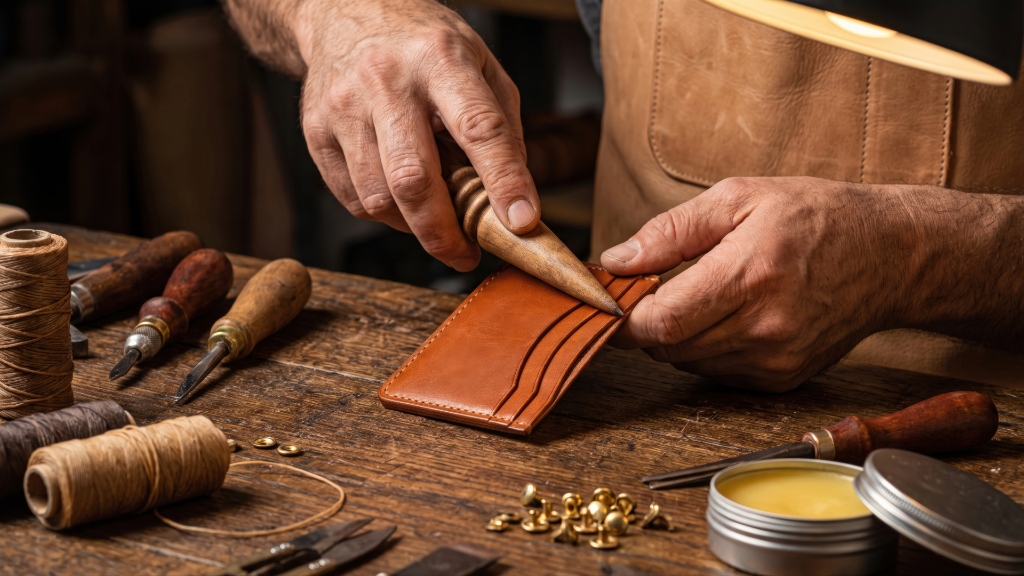
Modern export ateliers in India (such as Unicon Leather in Kolkata and Delhi NCR) use the exact same German Fortuna 0.4mm skiving machines, Durkopp Adler heavy-duty stitchers, and imported Italian Fenice/Stahl edge-painting chemistry used in Florence and Milan—while delivering a 45% to 65% lower FOB unit cost than Italian factories and 25% to 35% lower cost than Turkish manufacturers.
Vietnam has world-class mega-factories for high-volume technical nylon, polyester, and athletic footwear (requiring 1,000–3,000+ piece MOQs), but lacks a deep domestic cattle/buffalo tanning ecosystem. India possesses a centuries-old, vertically integrated tanning-to-stitching ecosystem in clusters like Kolkata (CLC Bantala), Chennai, Kanpur, and Noida—eliminating raw hide import delays and middleman markups.
Each Indian cluster has distinct strengths: Kolkata (Calcutta Leather Complex, Bantala) is the global capital for turned-edge luxury handbags, wallets/SLGs, and fine calf/vegetable-tanned goods; Delhi NCR / Noida excels in tailored lambskin leather jackets, high-fashion garments, and rapid buyer showroom coordination; Chennai/Ambur specializes in finished cow/goat leathers and footwear; and Kanpur is renowned for heavy bridle leather, saddlery, and rugged belts. Unicon Leather combines a 4-plot factory atelier in Bantala, Kolkata with corporate R&D and outerwear coordination in Noida (Delhi NCR).
Yes. Unicon Leather sources 100% of its hides from Leather Working Group (LWG) Gold and Silver-rated tanneries equipped with Zero Liquid Discharge (ZLD) / Common Effluent Treatment Plants (CETP). Every export batch can be certified by SGS, TÜV, or Intertek for EU REACH Annex XVII (Chromium VI < 3 ppm, AZO-free, EN 1811 nickel-free) and California Proposition 65 compliance.
Send Your Tech Pack for a Comparative India FOB / DDP Quote
Currently manufacturing in China, Vietnam, Turkey, or Europe? Share your target specs or existing FOB target price—our engineering desk will prepare a confidential side-by-side costing and counter-sample proposal within 24 hours.